

Selling Into ASEAN: Why the Right Channel Partner is the Difference Between Success and Failure
At some point, someone needs to sell something to someone to make it happen. No trade system works unless there’s an actual transaction between buyer and seller.
For Canadian companies new to exporting merchandise into overseas markets, particularly ASEAN, the question is not just where to compete, but how to connect with the right buyers. Very often, that requires an intermediary – an agent, distributor, or channel partner to facilitate transactions.
The challenge is this: who to recruit, and how to find them?
The Trade Show Trap or Opportunity
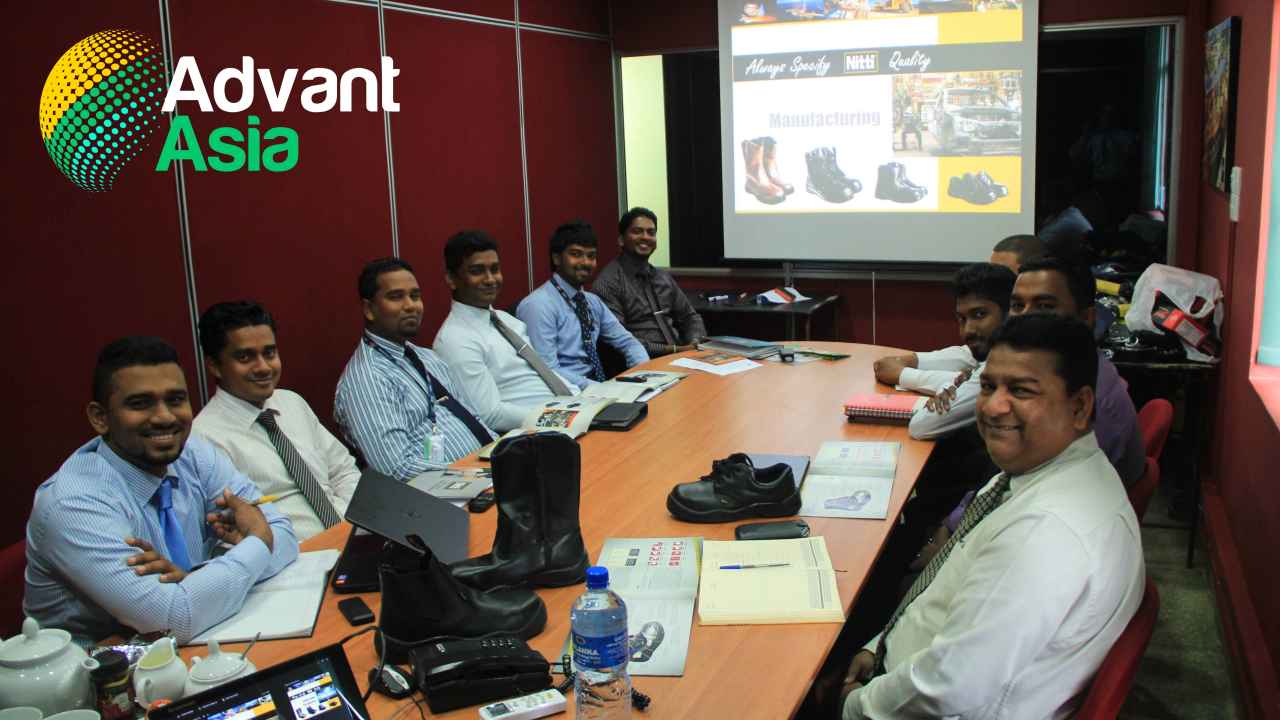
Imagine this: you’ve just returned from a regional trade exhibition in Singapore. You’ve had enthusiastic conversations with potential customers, agents, resellers, and distributors. Business cards are stacked high, dinner meetings were promising, and you even walked away with verbal commitments of interest.
Fast forward one year. Sales are well below expectations, communications have gone cold, and the “exclusive” regional partner you appointed is no longer engaged. What went wrong?
This scenario is all too common. Trade shows deliver instant visibility in a new market, bringing together buyers, distributors, and competitors under one roof. But what they don’t reveal is whether a prospective partner has access to your target customers – or the resources and long-term commitment required to build your brand in-market.
In today’s ASEAN, where exhibition and travel costs have surged – and where many top-tier partners and customers now prioritize local events over interregional ones – the risk of mismatched partnerships is higher than ever.
For example, if you intend to sell in Indonesia, invest in an Indonesian trade show. A regional or international exhibition in Singapore may generate exposure, but it’s unlikely to deliver the deep, relationship-driven connections you’ll need to succeed in-market.
A proven best practice is to extend your stay for at least a week after the exhibition. Use this time to visit potential partner sites, meet customer prospects directly, and get a true sense of the market’s pulse and vibe. Often, the most valuable insights emerge not in formal sessions, but in the conversations shared during casual meetings and meals. These interactions reveal far more about a partner’s credibility, relationships, and commitment than a conversation at a trade show booth.
The ASEAN Reality Check
ASEAN remains one of the world’s most dynamic growth engines – projected to be a top-five global economy by 2030. But unlike selling into North America, ASEAN markets are fragmented, relationship-driven, and fiercely competitive.
Choosing the wrong partner wastes valuable time, money, and brand momentum. Choosing the right one opens the door to sustainable, scalable growth. While many factors matter, three criteria should always rise to the top:
1. Access – Does the channel prospect have strong relationships with your target customers? In ASEAN, markets are built on trust and personal relationships, not just products and price-points. Joint customer visits are essential to verify the quality of these connections.
2. Capacity – Does the partner have the financial strength to support product launches, marketing campaigns, and inventory scale-up? Ambition without capacity is a recipe for failure.
3. Capability – Does the partner have trained or trainable sales resources – and ideally, product specialists dedicated to proactively selling your products? ASEAN channels increasingly prioritize learning and applying professional selling practices, and if you aren’t top-of-mind, you won’t grow. Close engagements and developing partners is crucial.
Beyond Products: Building Two-Way Partnerships
Partnerships are two-way streets. Channels expect more than just products – they seek brands that are simple to market, profitable to sell, and supported by committed suppliers. That means:
- Adapting to the region: tailoring campaigns, promotions, and sometimes even packaging and product features to local needs.
- Joint marketing: moving beyond product training into cooperative, customer-relevant initiatives.
- Coaching and joint visits: training channel salespeople how to sell your value proposition consistently and accompanying them to build credibility.
- Precision pricing: ensuring your cost structure allows them to profit after factoring in duties, landing costs, logistics, and competitive dynamics.
Without these, even the best-appointed partner will deprioritize your products in favor of easier wins.
Smarter Market Entry: Evidence, Not Assumptions
This is where discipline matters. Exporting companies can avoid costly missteps by taking a structured, data-driven approach to identifying best markets and developing partners.
Tools like AdvantAsia’s Power BI–based Market Intelligence Reports allow exporters to pre-qualify and quantify opportunities before committing to expensive travel, exhibitions, or trade missions. By filtering markets and channels through hard data – GDP growth, FDI trends, import flows, competitive mapping and analysis – you reduce guesswork and focus on best-fit markets and best-fit partners.
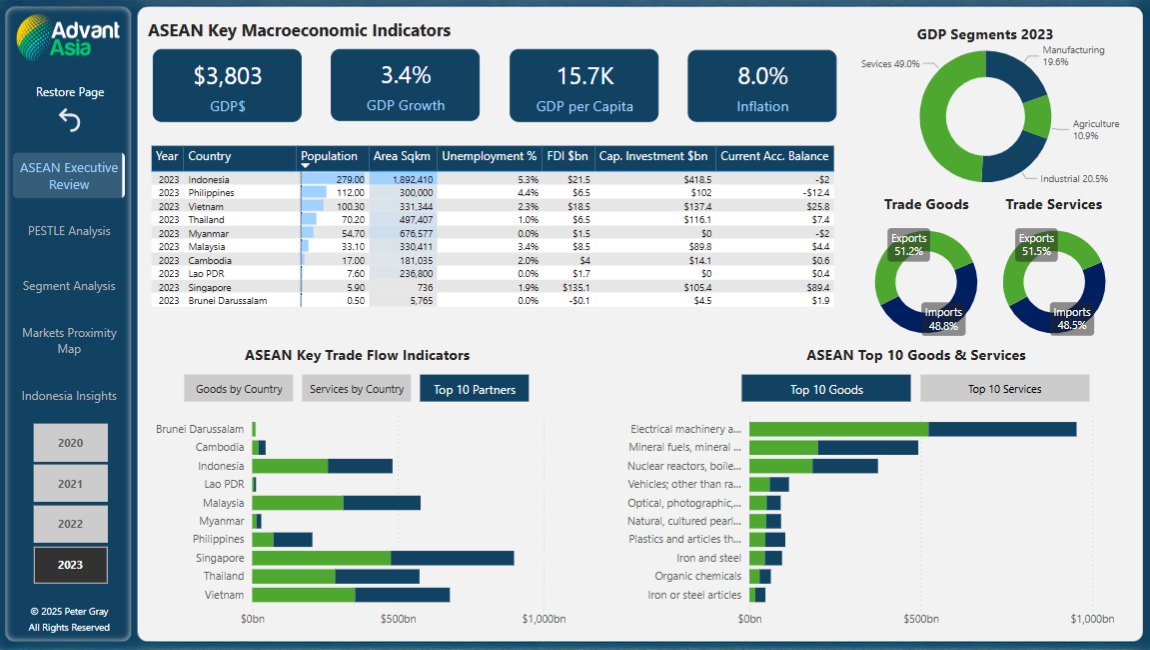
Put simply: before you decide who to partner with, first be clear on where to compete and how to compete. That’s the foundation of eventually knowing how to win.
The 2026 Outlook: Don’t Waste Time, Things Move Fast in ASEAN
The timing could not be more critical. With the CUSMA review looming in July 2026 and global trade patterns shifting under geopolitical pressures, Canadian exporters cannot afford failed experiments in ASEAN. The region is open, growing, and eager for high-quality Canadian products and services – but success hinges on making the right market and channel choices now.
ASEAN is not just another export destination. It is the next global growth engine. Companies that prepare, vet systematically, and build durable channel partnerships based on trust and confidence will thrive. Those that don’t may find themselves sidelined – again, holding a stack of unused business cards.
✅ Key Takeaway: Don’t let enthusiasm at a trade show or trade mission dictate your strategy. Use data to determine where to compete, be disciplined in selecting how to compete, and commit to building true partnerships if you want to win in ASEAN
“My intention is not to oversimplify a complex and challenging process, but to provide clarity on the essential steps to channel partner hunting and selection in ASEAN. My professional approach and personal insights are drawn from my 20+ years of in-market experience, reinforced by an MA in International Relations (Economy & Trade), an MBA in Strategic International Marketing, and a CITP designation (FITT)”.